
EMI Editor’s Choice
Bilingual summaries: High case fatality rate of human adenovirus type 7 infections in children: a meta-analysis and phylogenetic study of HAdV-7 epidemics over the past seven decades
You can view the original article here:
人7型腺病毒(HAdV-7)是引起儿童和军队人员严重呼吸道感染的重要病原体,首次发现是在1954年,在世界各地均有暴发流行,特别是2018-2019年,HAdV-7在我国多个省市引起儿童肺炎暴发,导致几十名儿童死亡。张其威团队通过对1954年至2023年间发表的305篇详细记载HAdV-7流行数据的文献进行全球病死率系统评估(Figure 1A),并结合全球已公布的313条HAdV-7全基因组序列的系统发育进化研究,首次揭示:HAdV-7全球感染病例超过16,100例(Figure 1B, 1C),其中因HAdV-7感染死亡至少388例(Figure 1D),死亡病例中87.63%为儿童,HAdV-7引起的病死率高达2.41%。
研究进一步发现,HAdV-7感染呈全球分布,亚洲感染人数最多(10,827例),中国大陆报告病例数居全球首位(7,861例)。对所有因腺病毒感染而死亡的病例分析发现:HAdV-7是目前已知引起病死率最高的腺病毒型别(39.28%)(Figure 2),远高于已知的HAdV-4(0.11%),其次是C species腺病毒,主要是器官移植后感染腺病毒死亡的患者。
通过系统发育分析发现,HAdV-7划分为4个主要谱系(Figure 3),包括7p原型、7V疫苗株、7E1和7E2变异株。其中,7E2变异株自2005年起成为全球主要流行株,引起更高的死亡人数(91例死亡,占67.91%)。研究还利用贝叶斯方法推算了HAdV-7的进化速率(3.89 × 10⁻⁵ 突变/位点/年),并预测其大约每70–80年出现一次新变异株,下一次新变异株可能出现在2048年左右(Figure 4)。
值得注意的是,尽管HAdV-7基因组整体进化速率较慢,但其衣壳蛋白基因(如Hexon和Fiber)存在关键氨基酸突变,可能改变病毒受体结合嗜性与免疫逃逸能力。此外,男性HAdV-7的感染率显著高于女性(3.21:1),提示性别可能是影响HAdV-7易感性的重要因素。
本研究首次通过大样本Meta分析与全基因组进化研究,系统揭示了HAdV-7自发现以来70年的流行规律、致病特征与演化动态,填补了该领域长期缺乏全局性数据的空白。研究结果强调,HAdV-7是导致儿童重症和死亡的最主要的腺病毒型别,急需开发有效疫苗和抗病毒药物以应对其持续威胁。
暨南大学博士研究生李一强和硕士研究生邓思琦为本文共同第一作者,张其威教授和欧俊贤副研究员为共同通讯作者。美国乔治梅森大学Donald Seto教授、新墨西哥大学James Chodosh教授等合作者为本研究提供了重要支持。该研究获国家自然科学基金、广州国家实验室研发计划课题、病毒致病与防控教育部重点实验室开放课题等支持。
Human adenovirus type 7 (HAdV-7) is a significant pathogen responsible for severe respiratory infections in children and military personnel. First identified in 1954, HAdV-7 has caused outbreaks worldwide. Particularly during 2018–2019, it triggered multiple pediatric pneumonia outbreaks across several provinces in China, resulting in dozens of child fatalities.
Through a systematic global assessment of case fatality rates based on 305 articles documenting HAdV-7 epidemiological data published between 1954 and 2023 (Figure 1A), combined with phylogenetic evolutionary analysis of 313 publicly available HAdV-7 whole-genome sequences, the team led by Qiwei Zhang revealed for the first time that HAdV-7 has caused over 16,100 infection cases globally (Figures 1B, 1C), with at least 388 deaths attributed to HAdV-7 infection (Figure 1D). Among the fatal cases, 87.63% were children, and the overall case fatality rate of HAdV-7 reached 2.41%.
Further analysis revealed that HAdV-7 infections are distributed globally, with Asia reporting the highest number of cases (10,827), and mainland China having the highest reported case count worldwide (7,861 cases). Analysis of all fatal cases caused by adenovirus infections found that HAdV-7 is currently the adenovirus type with the highest known case fatality rate (39.28%) (Figure 2), far exceeding that of the known HAdV-4 (0.11%). The second highest is observed in species C adenoviruses, primarily affecting patients who died from adenovirus infections following organ transplantation.
Phylogenetic analysis revealed that HAdV-7 can be classified into four major lineages (Figure 3), including the 7p prototype, the 7V vaccine strain, and the 7E1 and 7E2 variants. Among these, the 7E2 variant has become the predominant circulating strain globally since 2005 and is associated with a higher number of fatalities (91 deaths, accounting for 67.91%). Using Bayesian methods, the study also estimated the evolutionary rate of HAdV-7 (3.89 × 10⁻⁵ mutations/site/year) and predicted that new variants emerge approximately every 70–80 years, with the next variant likely to appear around 2048 (Figure 4).
Notably, although the overall evolutionary rate of the HAdV-7 genome is relatively slow, key amino acid mutations in its capsid protein genes (such as Hexon and Fiber) may alter viral receptor-binding tropism and immune evasion capabilities. Additionally, the infection rate of HAdV-7 is significantly higher in males than in females (3.21:1), suggesting that gender may be an important factor influencing susceptibility to HAdV-7.
This study is the first to systematically elucidate the epidemiological patterns, pathogenic characteristics, and evolutionary dynamics of HAdV-7 over the 70 years since its discovery through large-sample meta-analysis and whole-genome evolutionary research, addressing the long-standing lack of comprehensive data in this field. The findings underscore that HAdV-7 is the most significant adenovirus type causing severe illness and death in children, highlighting the urgent need to develop effective vaccines and antiviral drugs to counter its ongoing threat.
Yiqiang Li, a doctoral student at Jinan University, and Siqi Deng, a master’s student, are co-first authors of this paper. Professor Qiwei Zhang and Associate Researcher Junxian Ou are corresponding authors. Collaborators such as Professor Donald Seto from George Mason University and Professor James Chodosh from the University of New Mexico provided essential support for this research. The study was supported by the National Natural Science Foundation of China, the Guangzhou National Laboratory Research and Development Program, and open projects from the Key Laboratory of Viral Pathogenesis and Infection Prevention and Control of the Ministry of Education, among others. 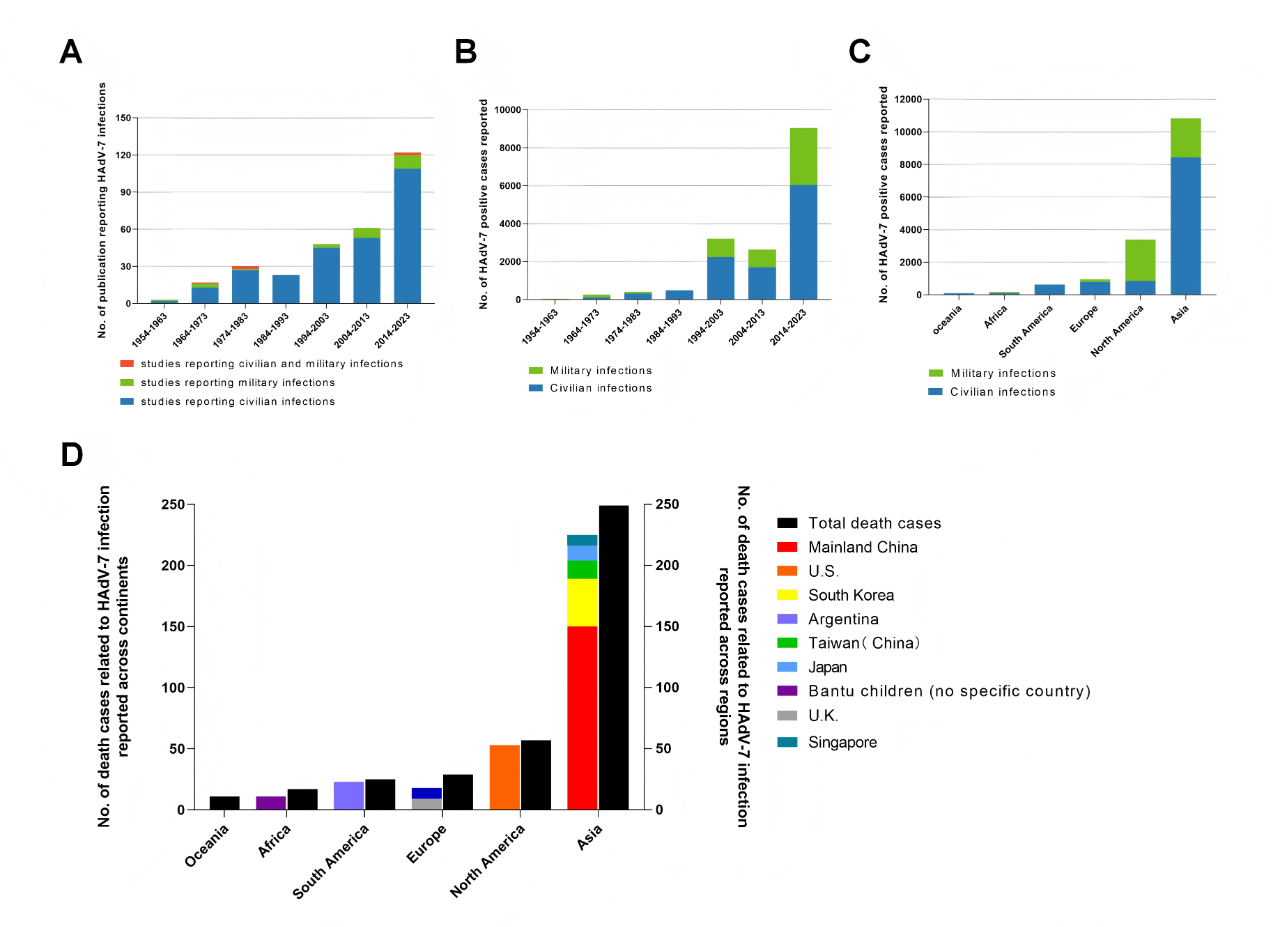
Figure 1. 全球 70 年间 HAdV-7 的流行情况及死亡人数
(A)每十年报道的文献数;(B)每十年间的感染人数;(C)各大洲感染人数;
(D)各大洲(国家)感染和死亡人数
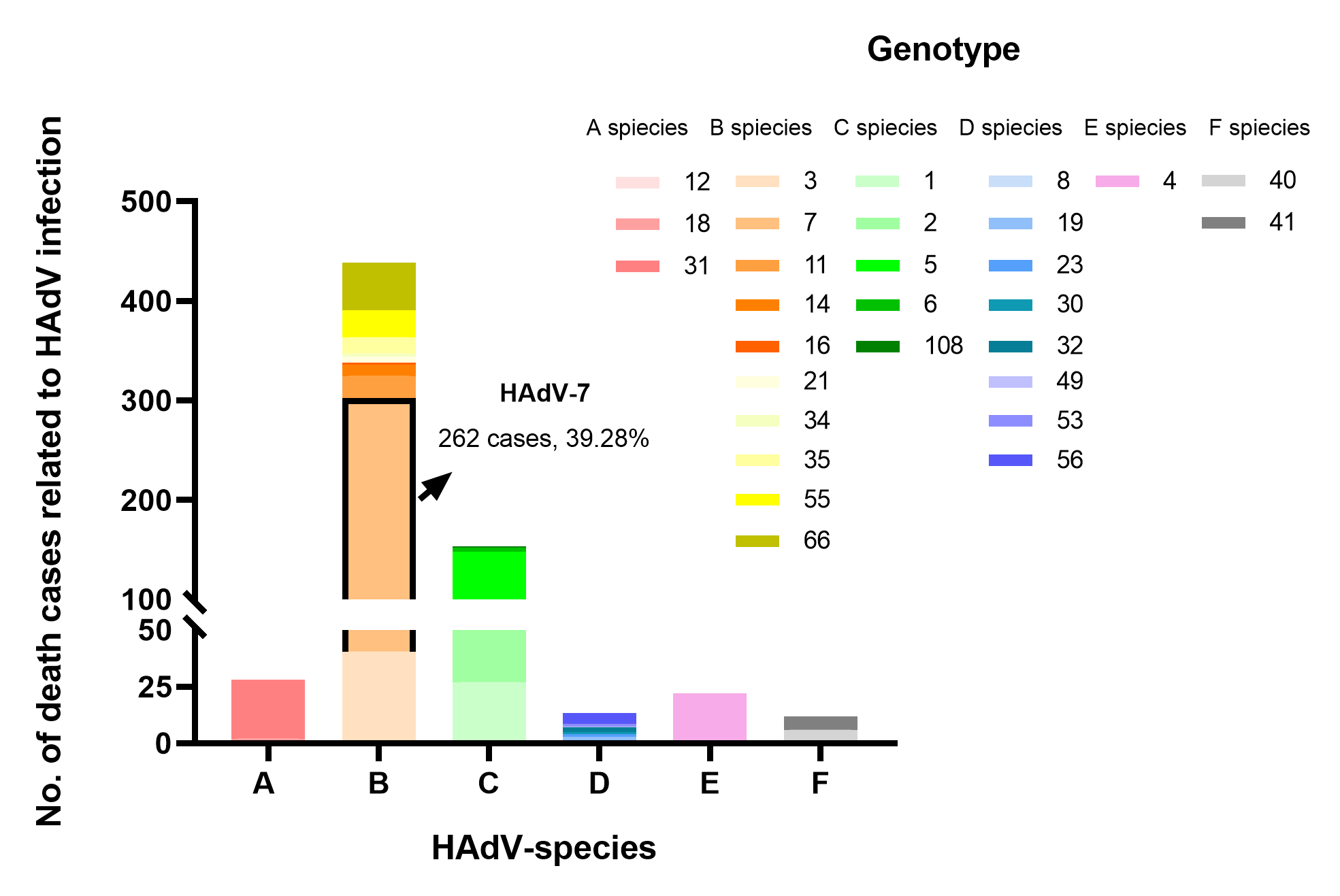
Figure 2. 不同 HAdV 型别感染致死人数分布情况
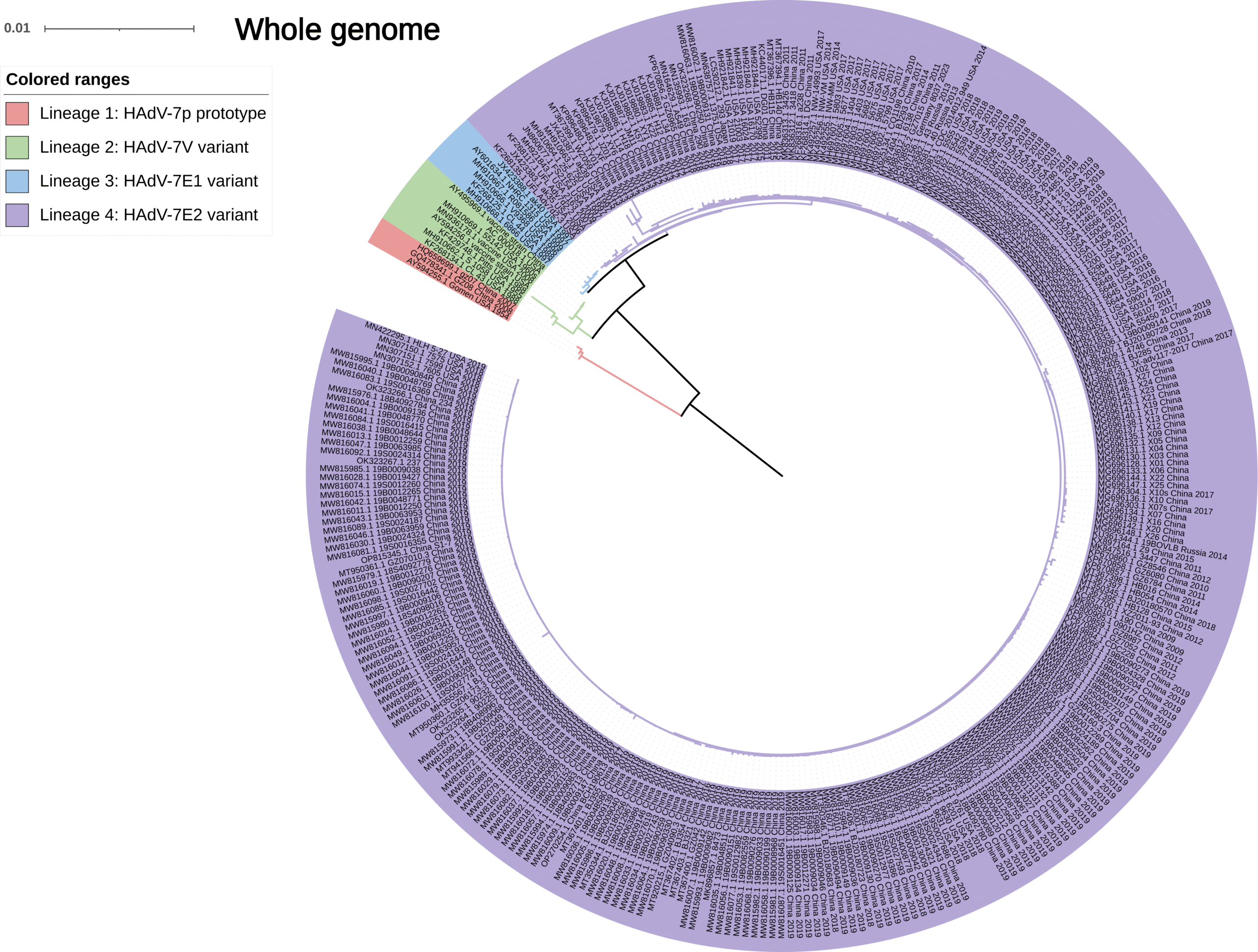
Figure 3. HAdV-7 全基因组系统进化分析
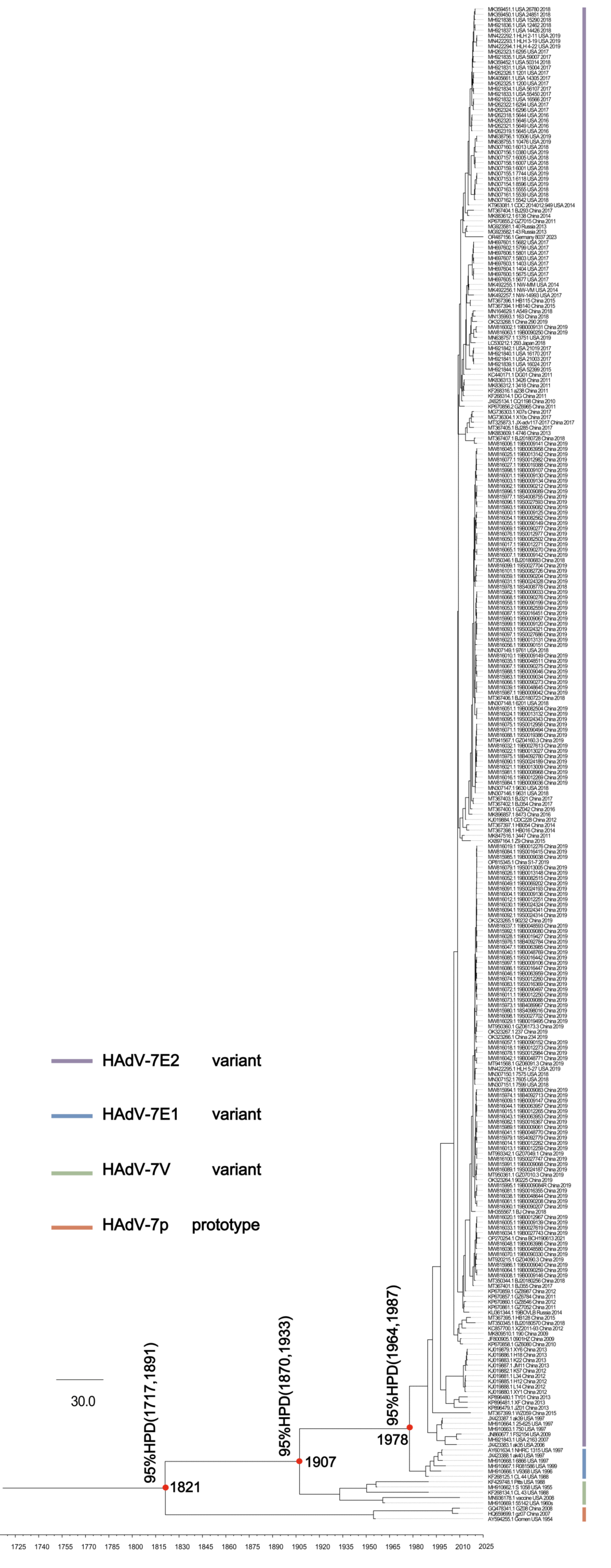
Figure 4. 贝叶斯方法计算HAdV-7分子进化钟